
‘Mustache’ Tells the Story of Finding Belonging While Navigating Two Worlds
.png)
Imran J. Khan’s new film Mustache, out today on Apple TV, presents a different kind of coming-of-age story, as 13-year-old Pakistani American Ilyas struggles to not only fit in at a new high school, but find his footing as he straddles two cultures.
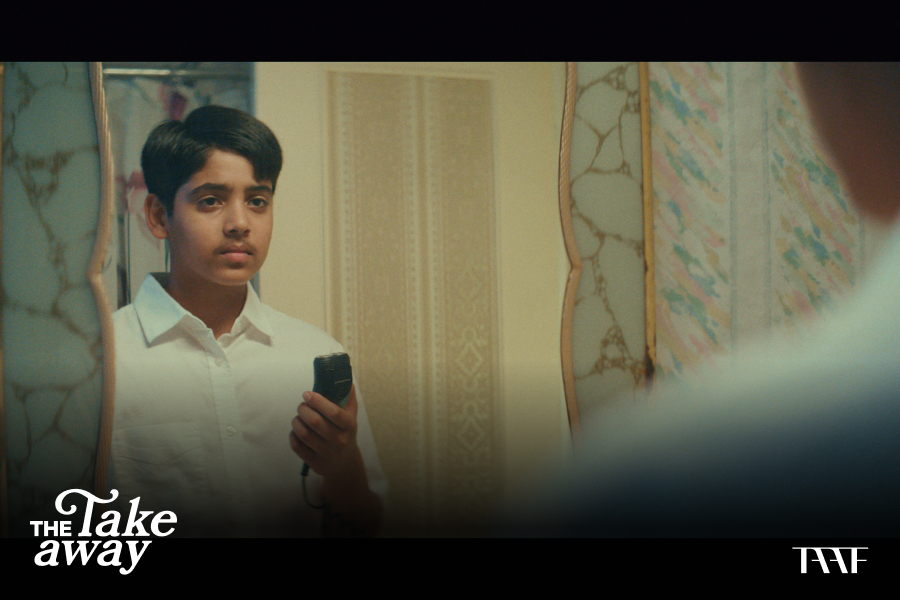
The film, Khan’s directorial debut, draws heavily on his own experiences. Set in Northern California in the 1990s, Ilyas is suddenly a fish out of water when his parents move him from Islamic private school to the local public school. He’s plagued by many of the same insecurities as other teens—in addition to a prepubescent mustache that his parents won’t let him shave. Initially determined to plot a return to his old school by any means possible, Ilyas soon finds that embracing all parts of yourself is the only way to truly belong.
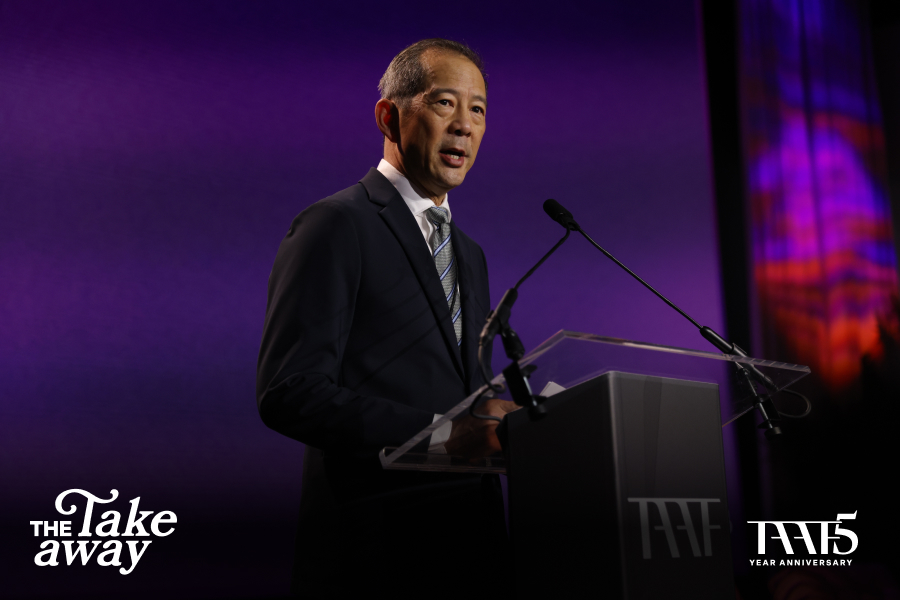
TAAF was proud to support the New York Premiere of Mustache on July 29, where we caught up with Writer and Director Imran J. Khan and Executive Producer Hasan Minhaj (who also appears in the film). We asked them about the delicate, cultural balancing act that many AAPIs have to manage, and the importance of telling South Asian and Muslim stories.

TAAF: Ilyas's story is about navigating two different worlds—his Islamic school upbringing and his new public school reality. What do you hope his journey shows young audiences about living proudly in both worlds?
Imran J. Khan: I think what Ilyas's journey represents, and what I hope people take away from the film, is that you need to accept and celebrate all sides of yourself to feel whole, to feel like you belong anywhere. And I think when you try to shut out one side of yourself—it could be your culture, it could be your religion, it could be where your parents are from—there's always some part of you that feels incongruous with the situations you find yourself in, especially as a young person. And I feel like being able to embrace both sides or all sides of yourself is such a beautiful thing.
Hasan Minhaj: I hope people see that the world deserves you bringing all of yourself to it. For a lot of us third culture kids, we grow up code switching, navigating between our at-home personalities, our spiritual kind of relationship and personalities, and then of course who we are in public—at school, with other coworkers and colleagues, and friends. And Mustache is this really beautiful coming-of-age film that shows that ultimately the world deserves all of you. And that comes from acknowledging every single part of you, which in this case is a super duper weird mustache.
TAAF: Hasan, what drew you to this project?
Hasan Minhaj: I have been a longtime fan of Imran J Khan. Funny enough, Imran and I went to college together. He has told me about this story for many years. So this has actually been several decades in the making. It is a painfully true story. It is a hilarious story. And it's a universal story. So I'm so proud to be one of the Executive Producers on this amazing project and bring it to the world.
TAAF: While the premise might sound niche, Mustache is really a universal coming of age film. How can we continue to normalize and celebrate South Asian and Muslim American stories?
Imran J. Khan: I think the best way to celebrate these kinds of stories is just to have more storytellers. The more storytellers we have who have diverse points of view, who have diverse backgrounds, the more interesting and complex narratives we can see on screen. And I think that's hopefully the goal of Mustache, to be like one of those drops in a bucket. But hopefully there are many films like this in the future where people can really tell their unique stories and we find belonging and universality in those unique stories.
TAAF: What kind of advice would you give AAPI and South Asian American storytellers who want to tell their stories and break through in the industry?
Imran J. Khan: I think there's an impulse to make things as understandable as possible for all audiences. But I think what makes a film special is its ability to bring people into an experience that they have never experienced before. And I think it would behoove Asian American filmmakers to double down on their identity and really bring out the details and the specifics from their experiences, because that's what ultimately makes their work special and stand out.
Mustache is available to rent or purchase on Apple TV now.