
Photo courtesy of Netflix.
Building a World of Historical Fantasy in ‘Avatar: The Last Airbender’ Season 2
.png)
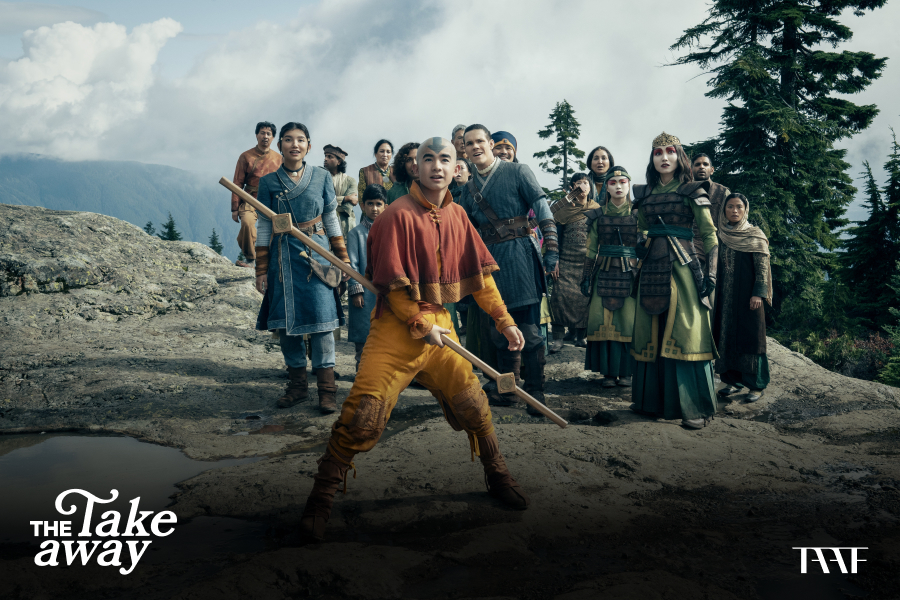
Season 2 of Avatar: The Last Airbender premieres on Netflix today, and the live-action series finds the young Avatar, Aang, continuing his journey to master the four elements and protect the world from the devastation of the Fire Nation.
Avatar: The Last Airbender seamlessly blends multiple cultural and historical elements. We spoke with Executive Producer/Writer Christine Boylan and Executive Producer/Director Jabbar Raisani about how they went about bringing pan-Asian and Indigenous authenticity to a fantasy series, and how Season 2 kicked up the realism with practical sets and outdoor filming.
TAAF: With Season 2, you're continuing to bring together so many different aspects of Asian cultures, from mythology to martial arts, to the beautiful costume design. What type of research went into building this world?
Christine Boylan: When we started in the writers' room, we not only used stories from people's actual families, we brought in a troupe of historical consultants and cultural consultants. We tried to treat this as historical fantasy, not just fantasy. So we could ask about different eras—is it okay to use a dress from this era and mix it with something from this era in a fantasy world? And I think that started early on in the writing process and went all the way through to post.
We still call our consultants whenever we have a question about First Nations indigenous Inuit culture, Chinese culture, Vietnamese culture. We do a theater piece in the middle of this season, which as a theater artist is really important to me. And I wanted to pull in pieces of all of these amazing shows I'd seen from around the world and make sure that it felt authentic. And so talking to a lot of different artists and talking to our consultants, [we got] the green light from them to go ahead and do that.
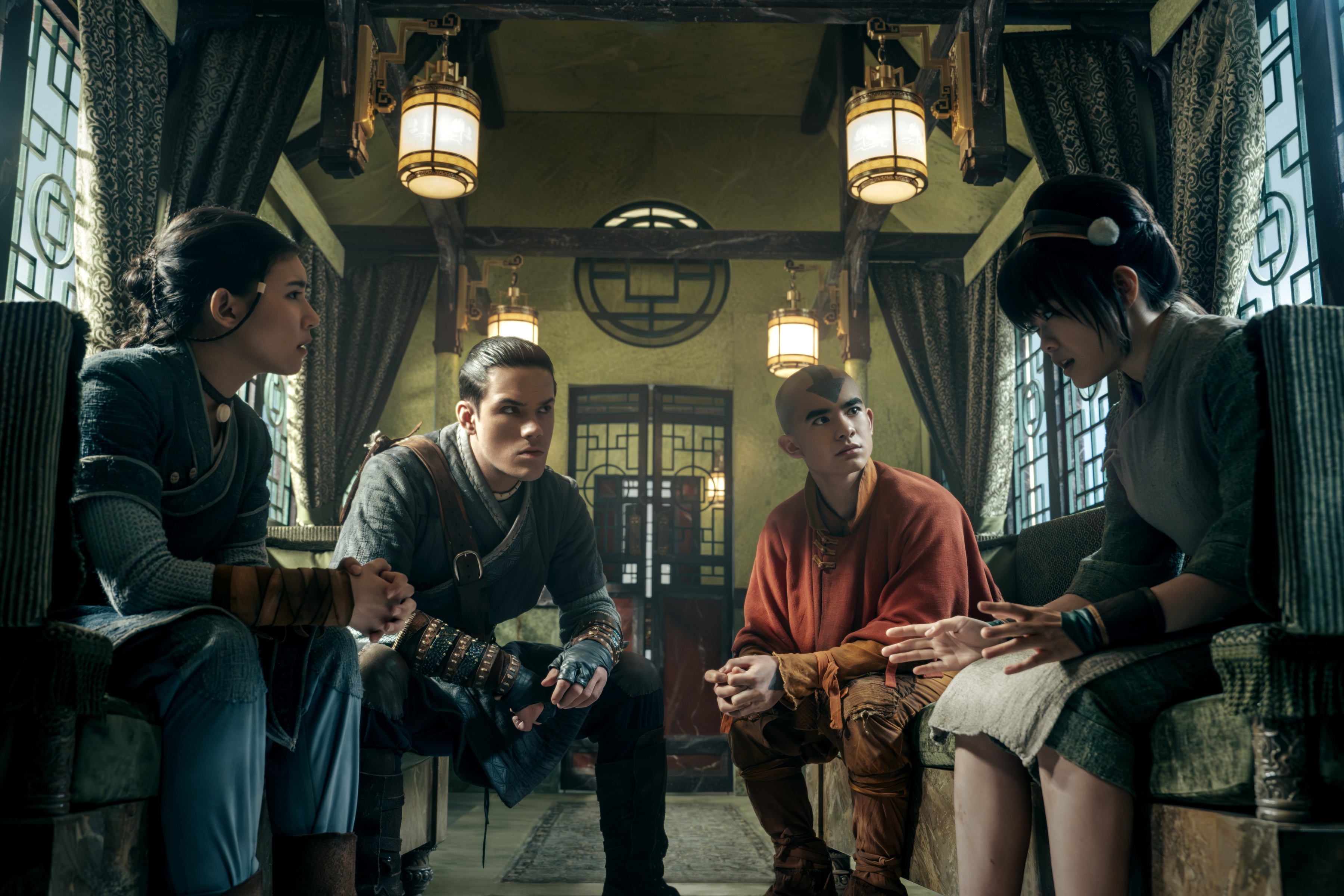
Jabbar Raisani: All of our departments have direct communication. So we would sort of establish the relationship, ask the basic questions, and then they would ask very detailed questions: "What exact Chinese character should we use for this sign?" Because we had multiple consultants, and sometimes it was like, "Well, the correct character is this, but you're a fantasy show, so I would actually recommend you use this because you are not actually in that time period. And the person that is saying it is of this class." It's so complex. It's not one-to-one with history. We're doing our own thing.
Christine Boylan: In the animated series, everyone speaks in an American vernacular that's current to the time period of the animated series. So we're speaking in a vernacular that is mostly North American, that's contemporary to the time we're making this series. And we brought in a lot more accents. We sort of diversified the palette of accents, and we wanted people to go with their natural accent as much as possible. Although we have so many talented people who can do multiple accents, we wanted to bring that in because this is a story that has war as a backdrop and it has migration as a backdrop. People are moving from city to city and place to place. I want there to be that vocal texture as well. So that was really important to us.
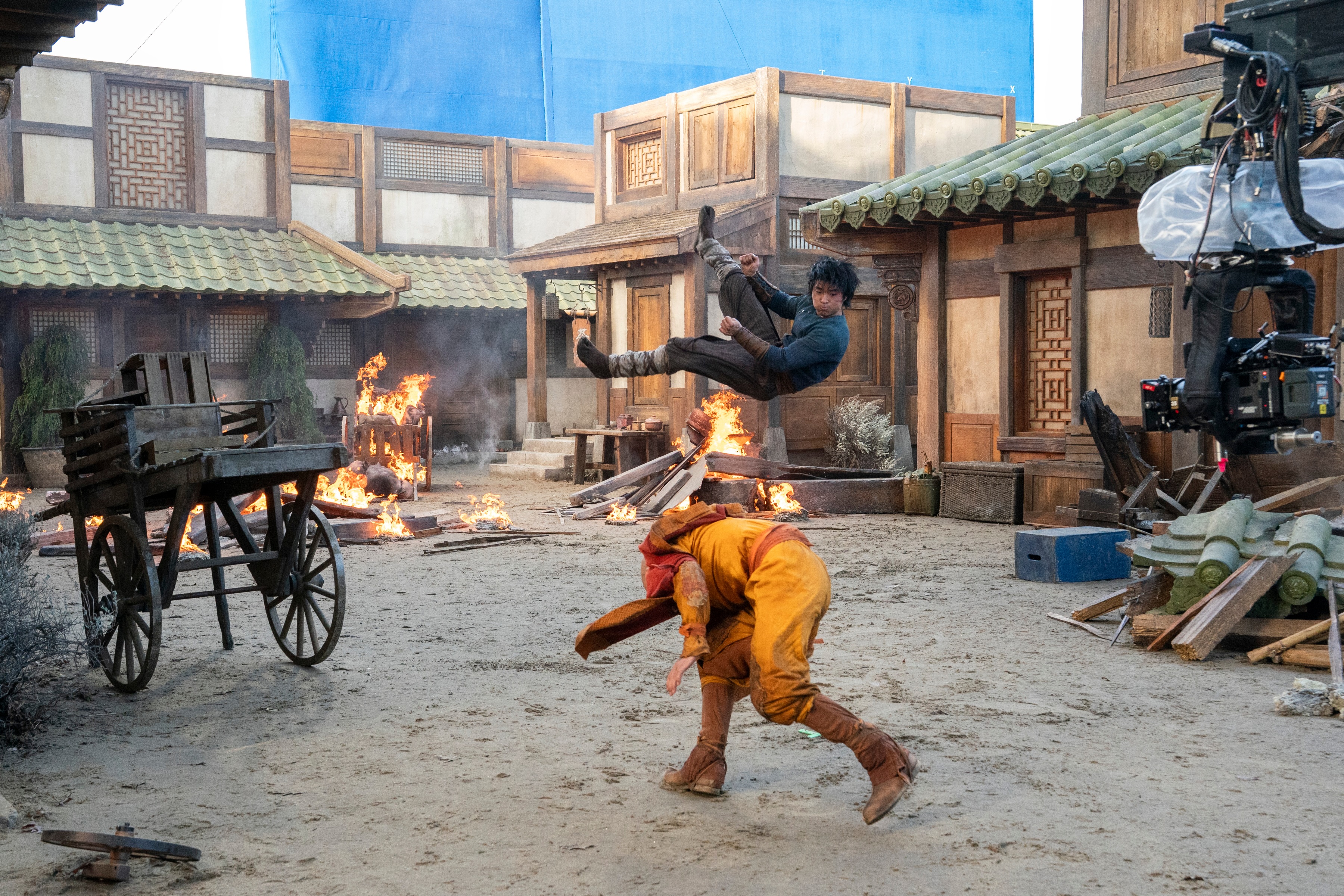
TAAF: In this season, we get to the city of Ba Sing Se. So these are all built sets, correct?
Christine Boylan: Yeah, it's a sound stage. We borrowed it from Shogun.
Jabbar Raisani: Huge exterior back lot, and then some interior sets as well.
TAAF: And what was behind that decision to move towards filming on set and locations?
Christine Boylan: When Albert [Kim] decided to move on, and Netflix called…the first condition was I want to be out in the weather. I have a lot of experience just being outside. I know how tough it is, but I know the value that's in it. I want to build indoor outdoor sets, and I want to build on interiors, on sound stages. We have these amazing artists. Let's use them to their full potential. And then Jabbar came on and I was like, “Listen, are you cool with this?” And it was, I think, exactly what you wanted.
Jabbar Raisani: Yeah. I mean, I've shot on Volume, I've shot on green screen, blue screen stages, and I've shot on locations. And for me, actual physical locations and exterior sets are the most authentic way I know how to make the film. So for me, if I can stand in a real space and I can track where the sun's going to go across the day and I can plan my shots based on what the sun's going to do, that's how I know how to make something that I feel passionately represents what I want it to look like. And I find that much harder to do in an interior controlled space where you're trying to recreate the things that just happen naturally in real life. And I think when it's hard to film something, that tends to mean that what you're doing is going to look good. When you're outside and there’s just rain pouring down on you and you can't see, and you're trying to wipe the monitor, what you actually film looks great.
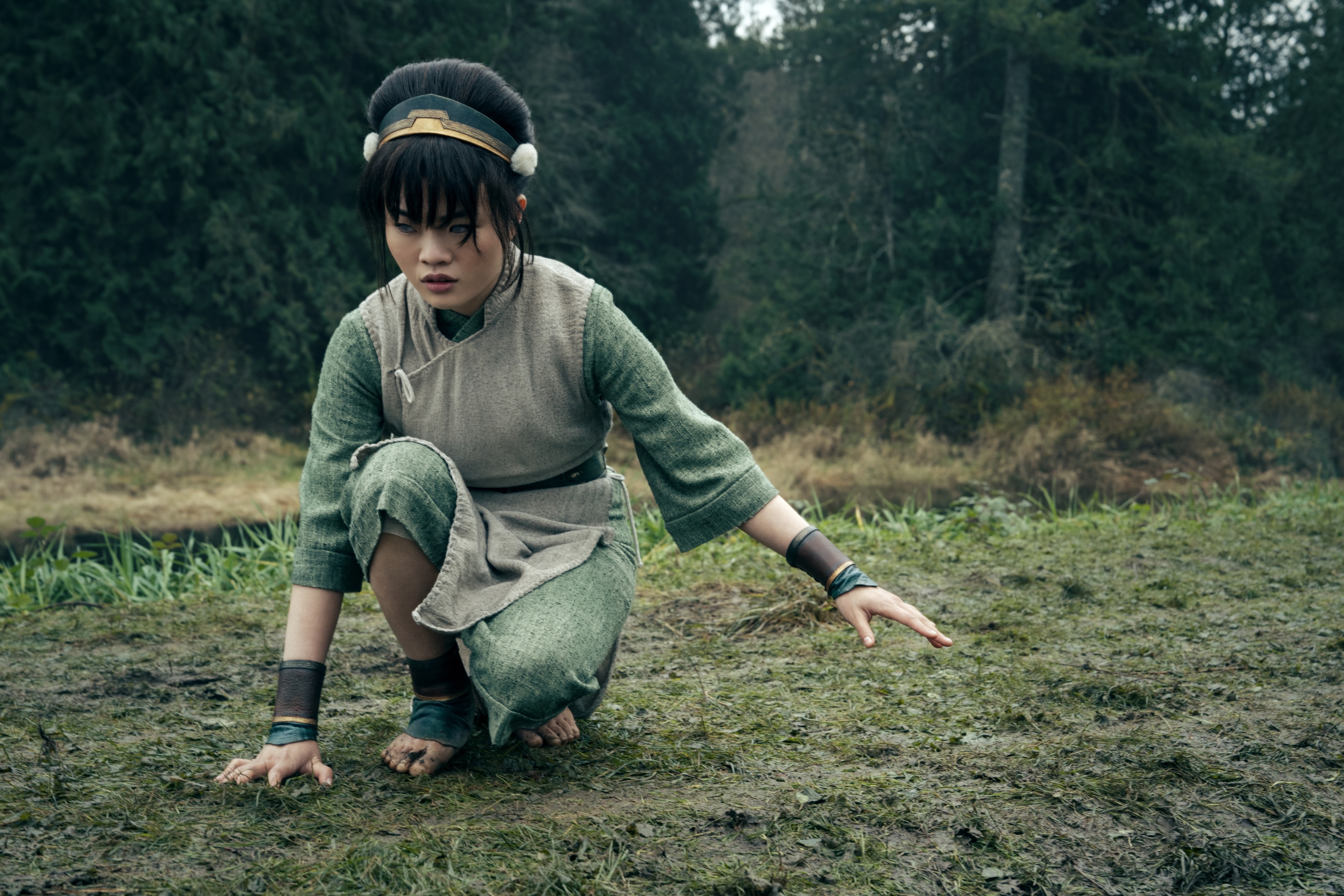
Christine Boylan: We had some magical moments of snow. There's a scene where Toph walks into the tea shop and there's snow on her coat. And I was crying—maybe it’s because I was cold—but we're inside one of the buildings in Ba Sing Se shooting her walking down the street, and it's snowing and it's magical, and I'm just so glad this happened.
Season 2 of Avatar: The Last Airbender is streaming now on Netflix.