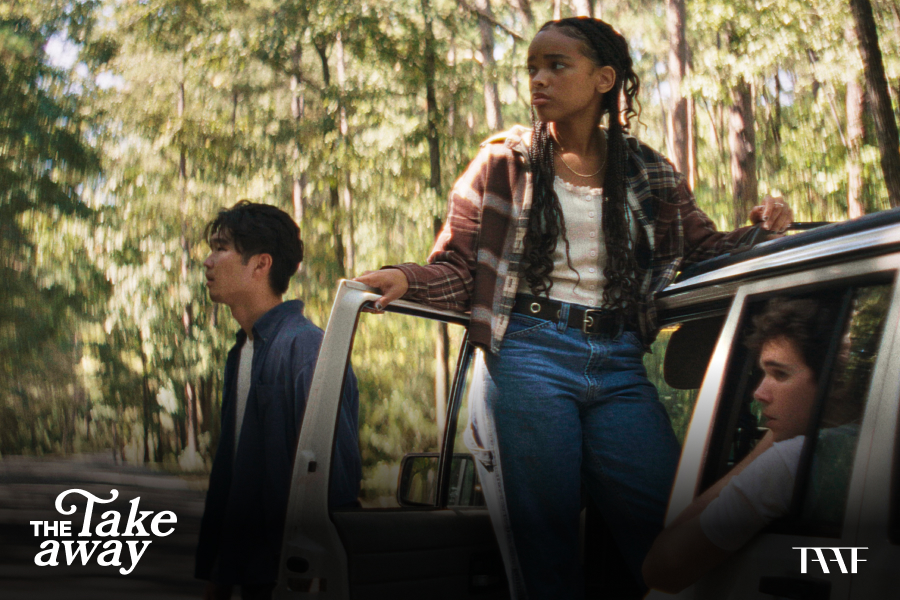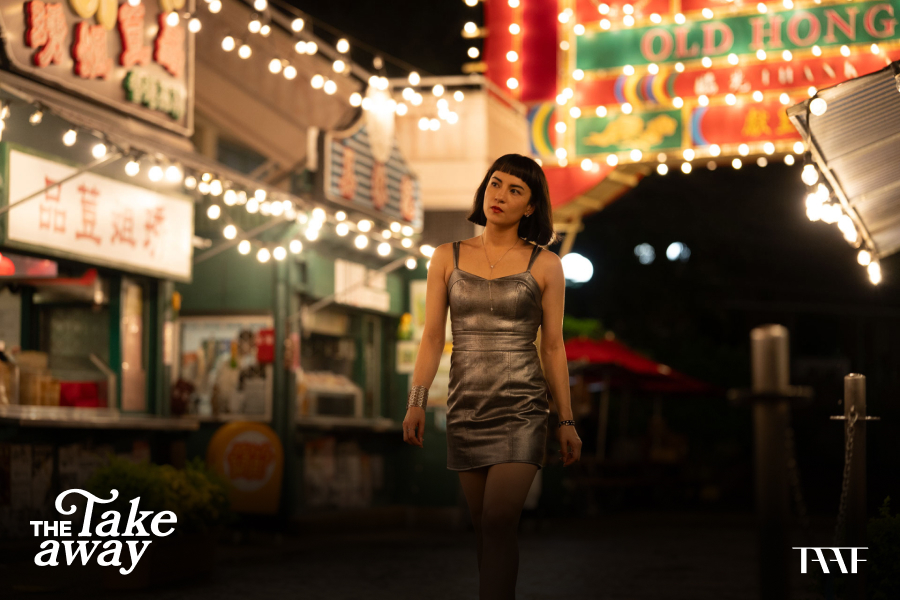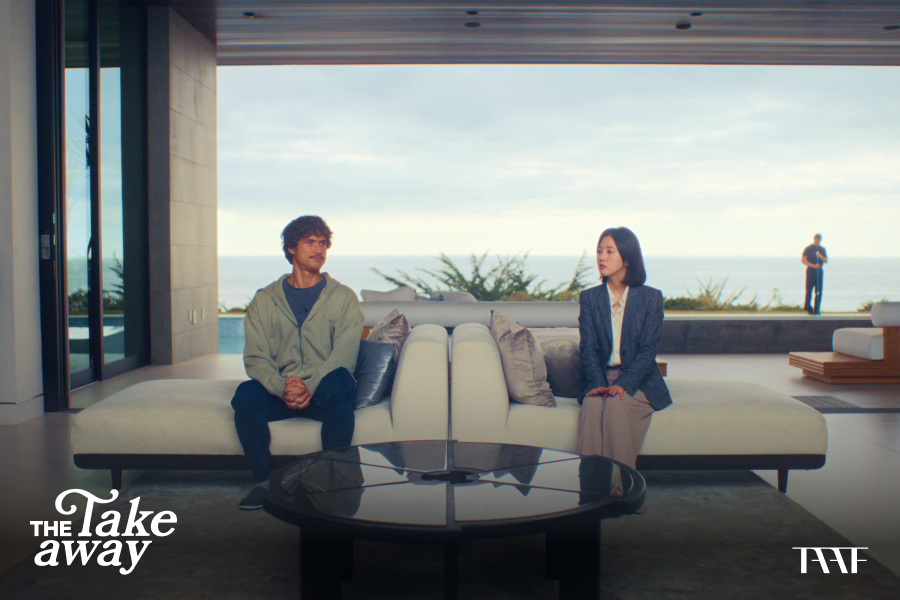

Charles Melton and Seoyeon Jang in BEEF. Photo courtesy of Netflix.
‘BEEF’ Creator Lee Sung Jin Explores Generational Divides and the Range of Asian Experiences in Season 2
.png)
BEEF Season 2 drops on Netflix this Thursday, with a new set of characters and a fresh “beef.”
In the second 8-episode season of the anthology series, Gen Z couple Austin and Ashley (Charles Melton and Cailee Spaeny) are at odds with Millennial couple Josh and Lindsay (Oscar Isaac and Carey Mulligan), as they become entangled in a complex web of wealth inequalities, scandal and struggling relationships. The drama unfolds in an elite Southern California country club owned by a Korean billionaire and her husband, played by veteran actors Youn Yuh-jung and Song Kang-ho. We spoke with BEEF creator, showrunner and executive producer Lee Sung Jin about where the story came from and how he approaches crafting Asian characters.
After Season 1’s success, what was your process in coming up with this new story?
My process, honestly, was just pitching wildly to Jinny Howe at Netflix. She wisely pulled me aside and told me, “Hey, I can tell you're just pitching to pitch and we don't have to do a Season 2 of BEEF. You wrote it as a limited, and there's a definitive period to the sentence that is Season 1. So we can do another show together if you want, but you should only do a Season 2 of BEEF if you find something that you're passionate about.” Which is a harsh call out, but one that was needed and I took some time, reflected, and was ready to walk away.
But real life kind of hit me in the face again, where I stumbled into overhearing a—let's call it a “heated debate,” as Josh says in the show—coming from a couple's home in my general neighborhood (which I'll speak vaguely about as I still live in said neighborhood). But that altercation caused a little bit of a stir. And what I found interesting was not the incident itself, but how people reacted to the incident. I found that my Gen Z peers were kind of aghast. “Did you call 911?” “He said what?” “She said what?” And the Gen X and Millennial peers were just sort of like, “I mean, it's not that big of a deal.” And so I found that juxtaposition very interesting, and I thought, maybe there's a show here where we examine love and marriage, not through one couple, but through different couples in different stages of life, showing the generational divide when it comes to how we view love and marriage.
In BEEF you’ve given us Asian American and Asian characters in roles that are not explicitly about their “Asianness.” How important was this to you in the writing and production of the show?
It was extremely important. I'm always trying to find new dimensions of the Asian experience to portray. In Season 1 we portrayed the Korean American diaspora pretty thoroughly, especially the immigrant experience, especially the lower class Danny experience. And one thing I didn't get to explore was that of someone who's half Korean. A lot of the writers on the show are either half Asian or half Korean. My daughter's half Korean. And so that felt like very fertile ground, and I knew that tug-of-war that was going to happen.
Because there are so many facets of the Asian experience to explore, I think it's shortsighted sometimes to limit us to just one or two shades of that full spectrum.
Obviously, in Season 1 we explored Amy's Calabasas upper class, gentrified life. But what we didn't explore was Native Koreans’ billionaire chaebol (conglomerate) life, turning that up a notch. So I'm always trying to find different shapes, different angles so that we don't repeat ourselves. And also because there are so many facets of the Asian experience to explore, I think it's shortsighted sometimes to limit us to just one or two shades of that full spectrum.
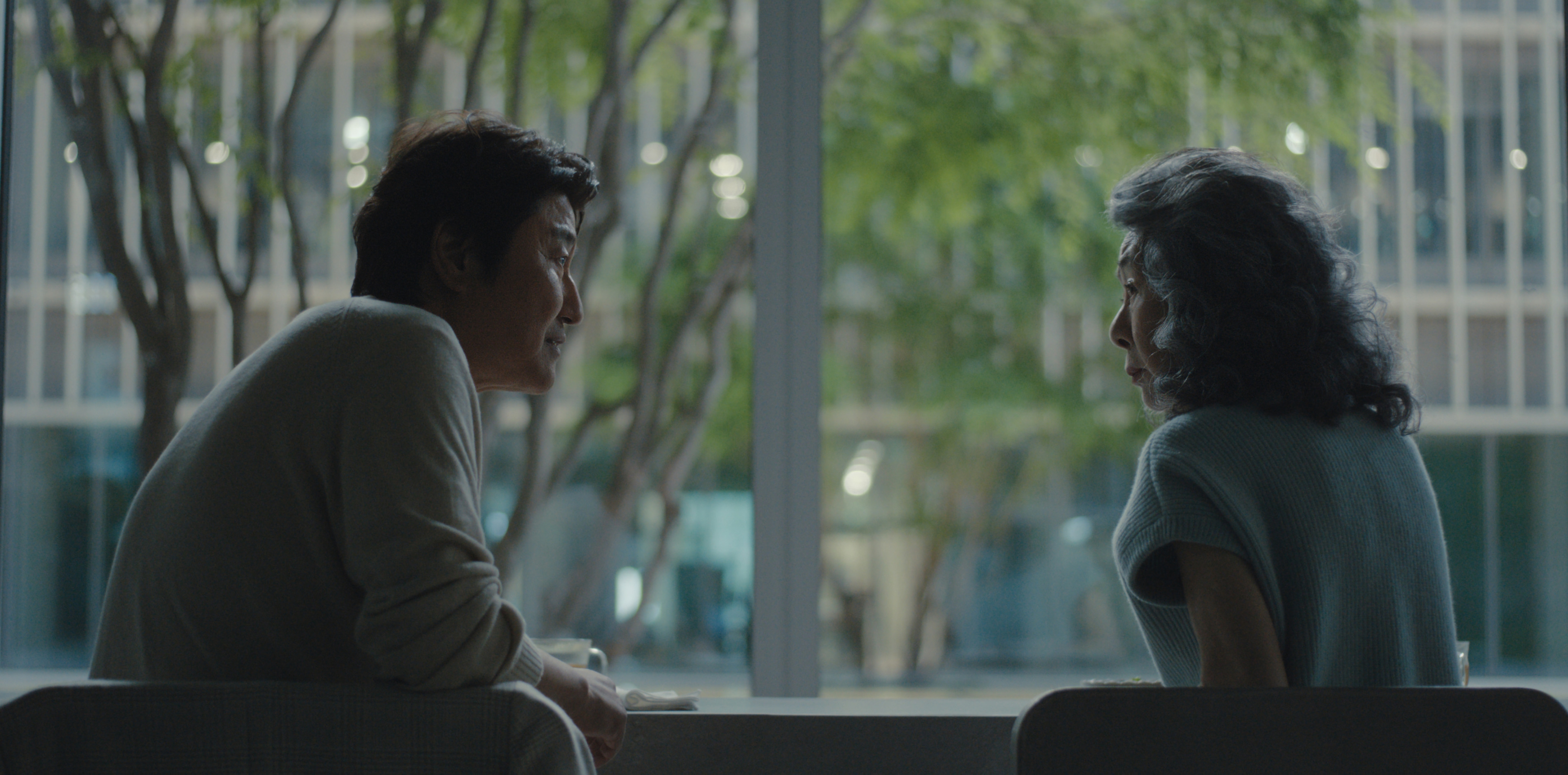
What was it like having Youn Yuh-jung and Song Kang-ho join the project?
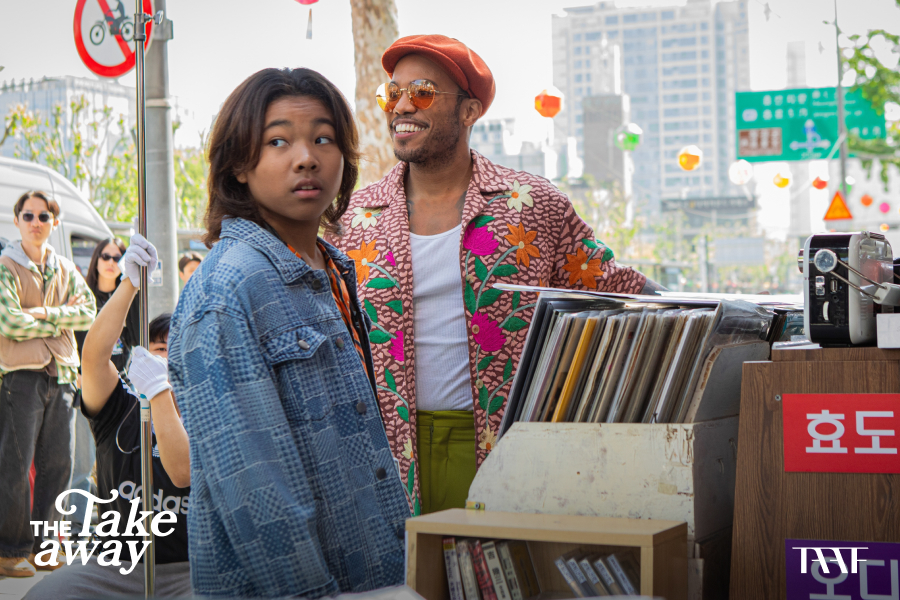
I mean, it's a dream come true. I couldn't believe it when I set out to try and get them attached. I just thought of it as a moonshot, really. I thought maybe we'll get one of them, and maybe they'll just want to do a small cameo. But to get both is really honestly the peak of my career. I remember shooting in Korea in Seoul at the Amorepacific building, which no one ever gets to shoot at. It's one of the most beautiful buildings in Korea, which would only happen thanks to the favors called in by a Korean chairwoman that I know, Miky Lee, who pulled some strings to allow us to shoot there. And I'm directing YJ and Song Kang-ho in their first scene together ever in Korean cinema history. In the middle of doing that, director Bong Joon Ho surprises us on set and he kind of comes up to the monitor and he elbows me and jokes, "Oh, are you sure you want to frame it like that?" And to see him with his headphones on doubled over in laughter as he watches the scene—that's a memory I'm going to remember forever, and it inspires me to keep making narratives worthy of these greats.
Season 2 of BEEF releases on April 16th, 2026 on Netflix.