
How a Small Museum in Southern California is Preserving the Cultural History of Martial Arts
.png)
Tucked away in downtown Glendale, CA, is a museum that’s keeping the vibrant stories and immigrant experiences behind the martial arts alive. The Martial Arts History Museum is dedicated to celebrating not just famous martial artists, but the histories they’re rooted in—the rich cultures and heritage that martial arts pioneers brought with them to the United States. I spoke with Michael Matsuda, the president and founder of the museum, to learn more about how the museum came to be, and why it’s so important to preserve this history.
What may be surprising to first-time visitors to the Martial Arts History Museum is that this is not a sports museum. As Matsuda explains, everyone knows about the “punch and kick,” but there’s far more to martial arts. “It’s the art, the culture, the music, where it came from. All that’s important—if we don’t focus on that, we’re going to lose that aspect of it.”
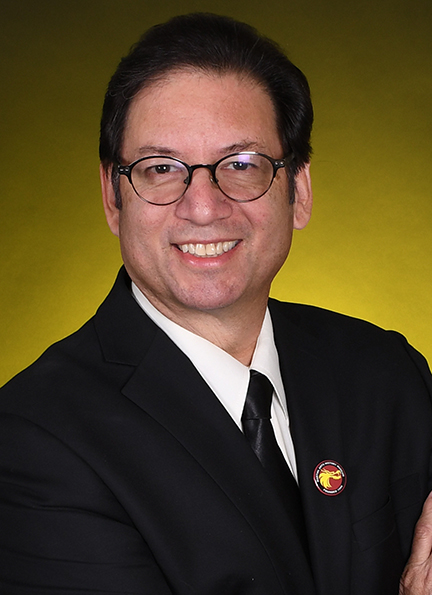
Matsuda’s introduction to martial arts came at a very young age, but it was not an immediate fit. His parents were very involved in the Sun Valley and San Fernando Valley Japanese Community Centers. At 8 years old, his father wanted him to take judo, and because his family was involved in the center, he was able to enroll despite the age requirement being 16. He and his friend Donald Isa joined, and, being the smallest there, he soon regretted it.
“All I remember is the ceiling and the floor, Matsuda recounted. “They kept flipping us and throwing us and it was a terrible experience.” Matsuda quit after a year, but then something happened which changed everything. “Lo and behold, about a month later, the bully at elementary school jumped me. He jumped on my back, I grabbed him, I did a judo flip, threw him on the ground, and the whole school saw and applauded. And that was it. I said, ‘This works.’ And I knew from that point on, martial arts was going to be part of my life.”
Matsuda went on to study karate, jiu jitsu, kung fu, and other martial arts. After getting a journalism degree, he began writing for martial arts magazines like Inside Kung Fu and Black Belt, but felt that the rich background and cultural history were being left out of the story. He started his own magazine and authored books, but wanted something even more permanent to celebrate the history of martial arts. With the idea of a museum in mind, he went back to school for eight years, learning how to create and run a museum.
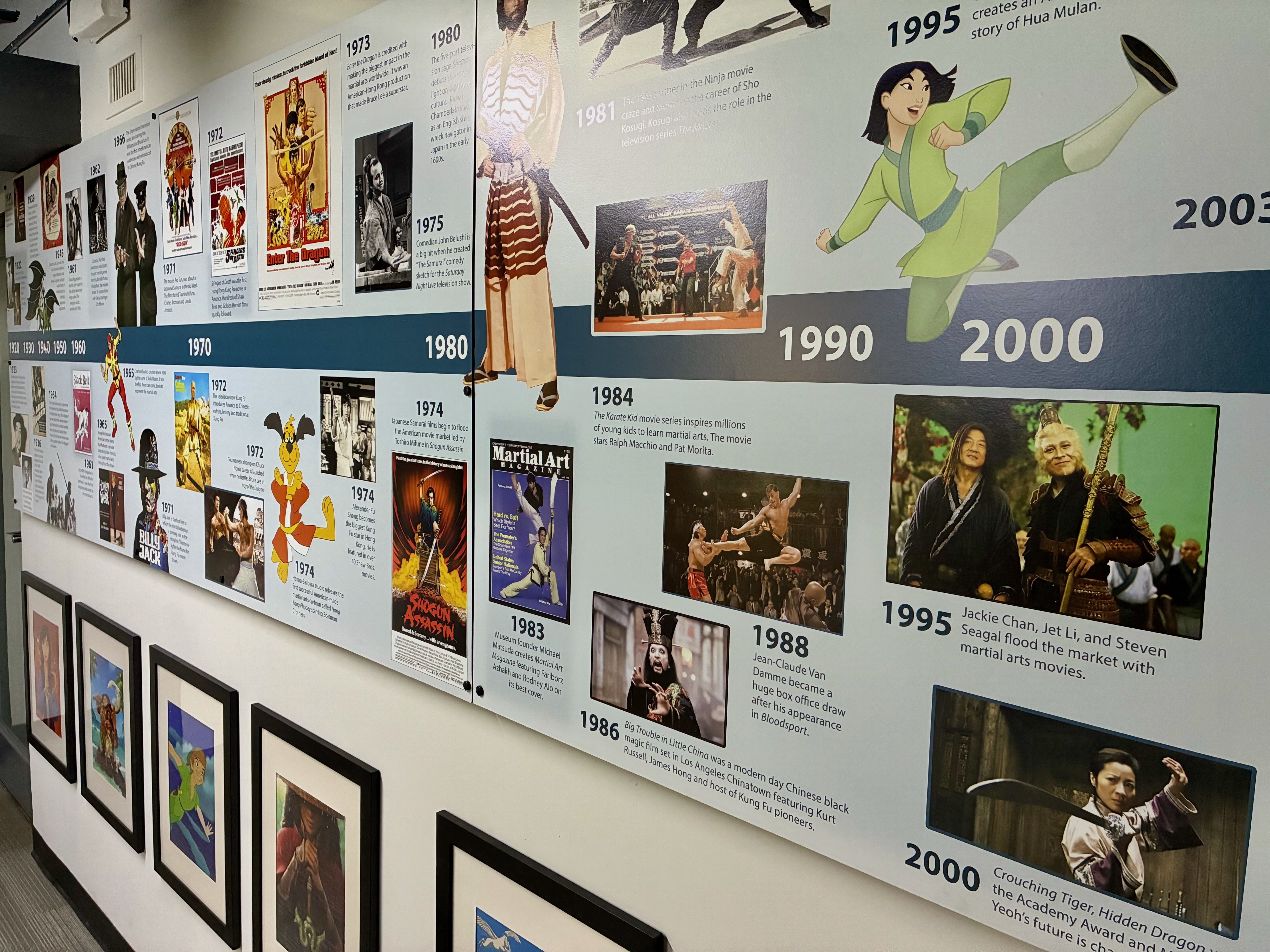
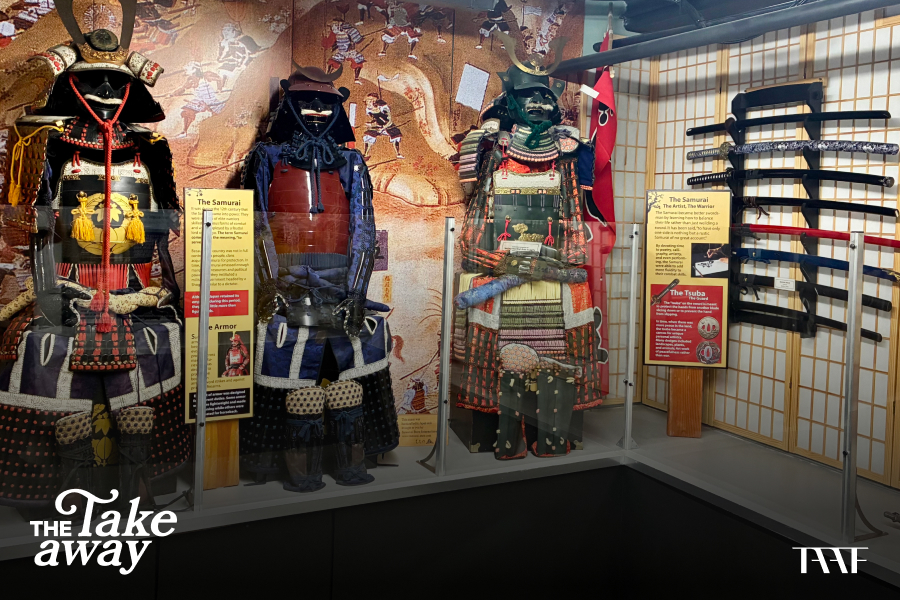
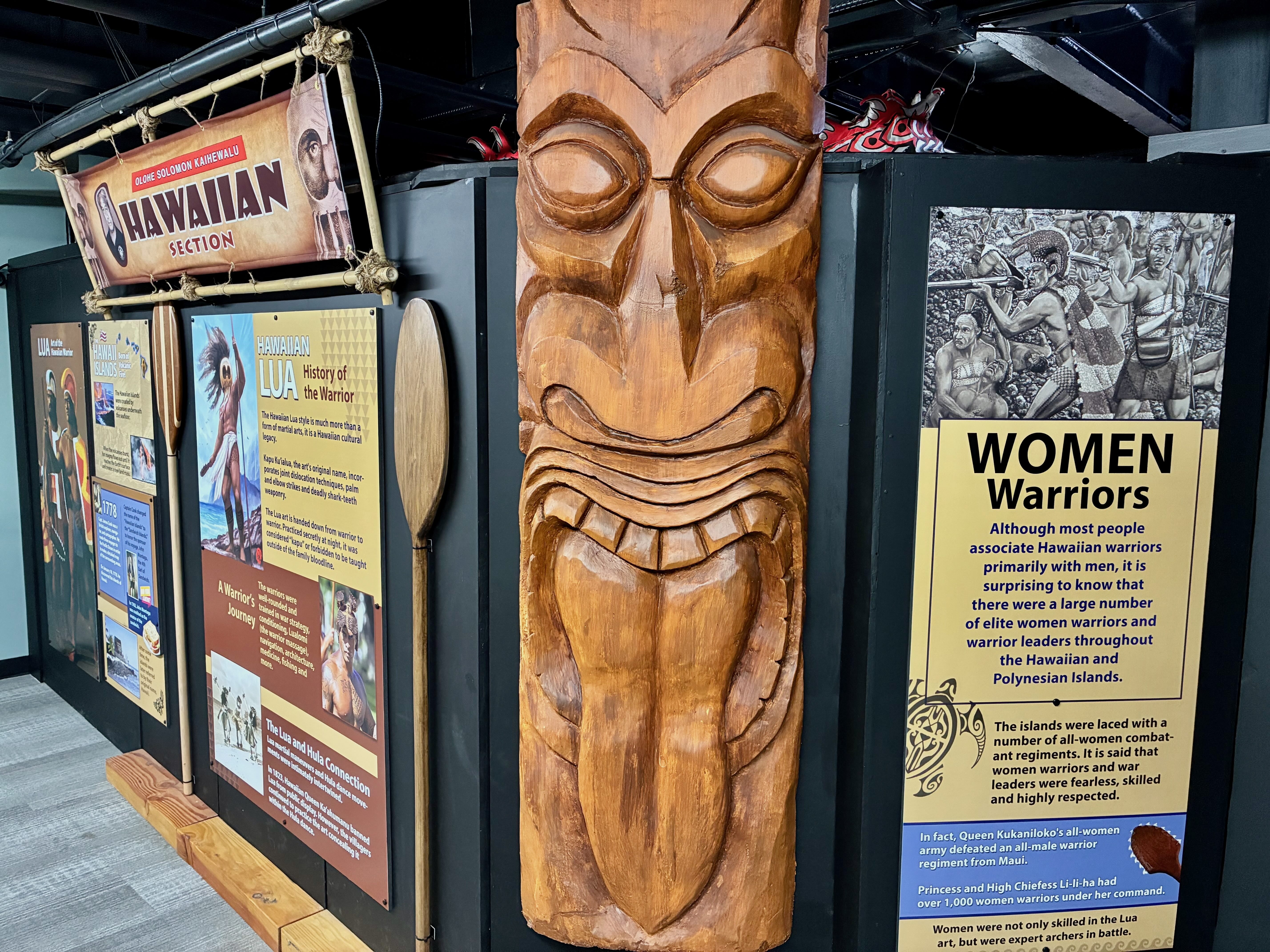
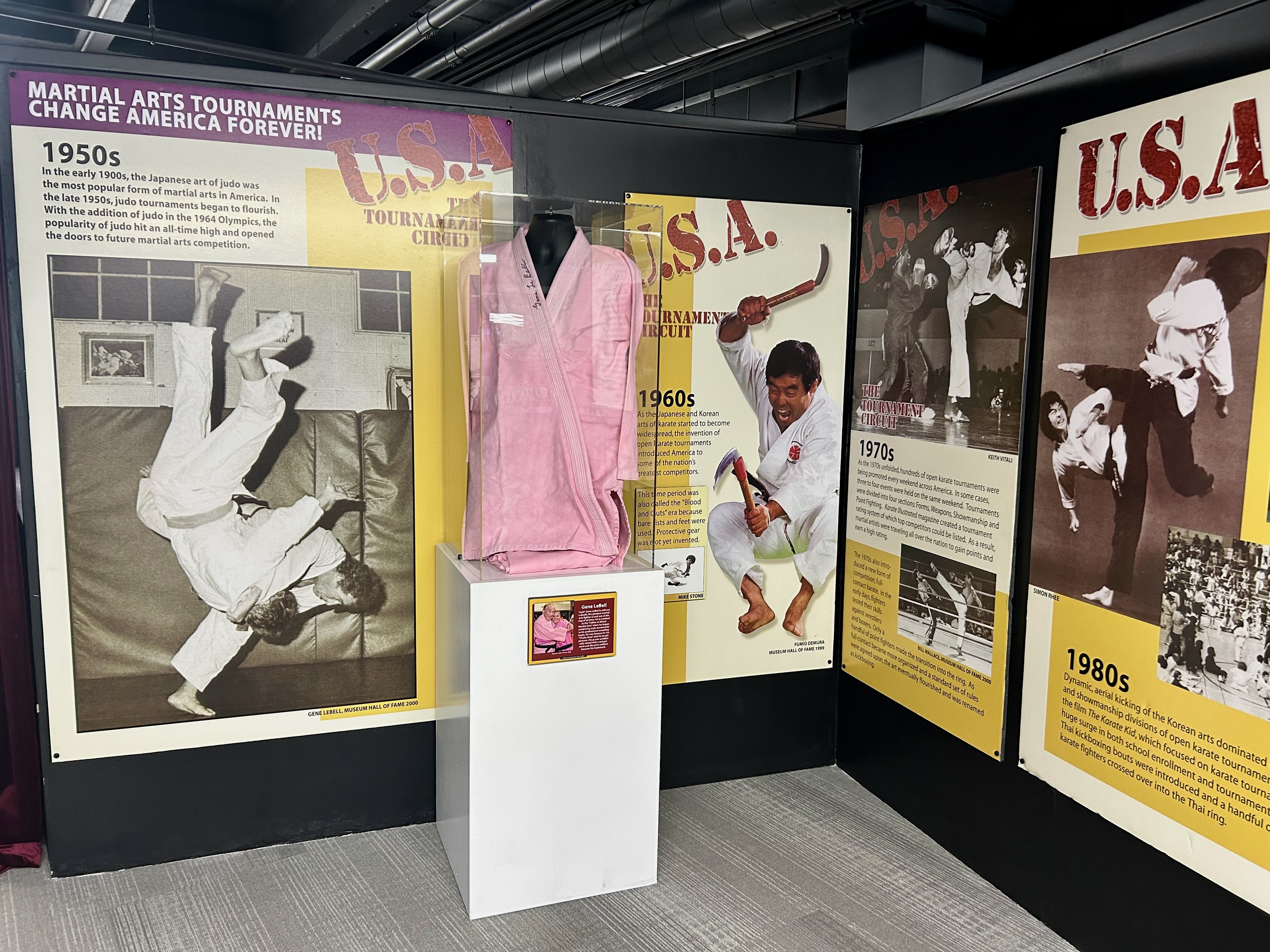
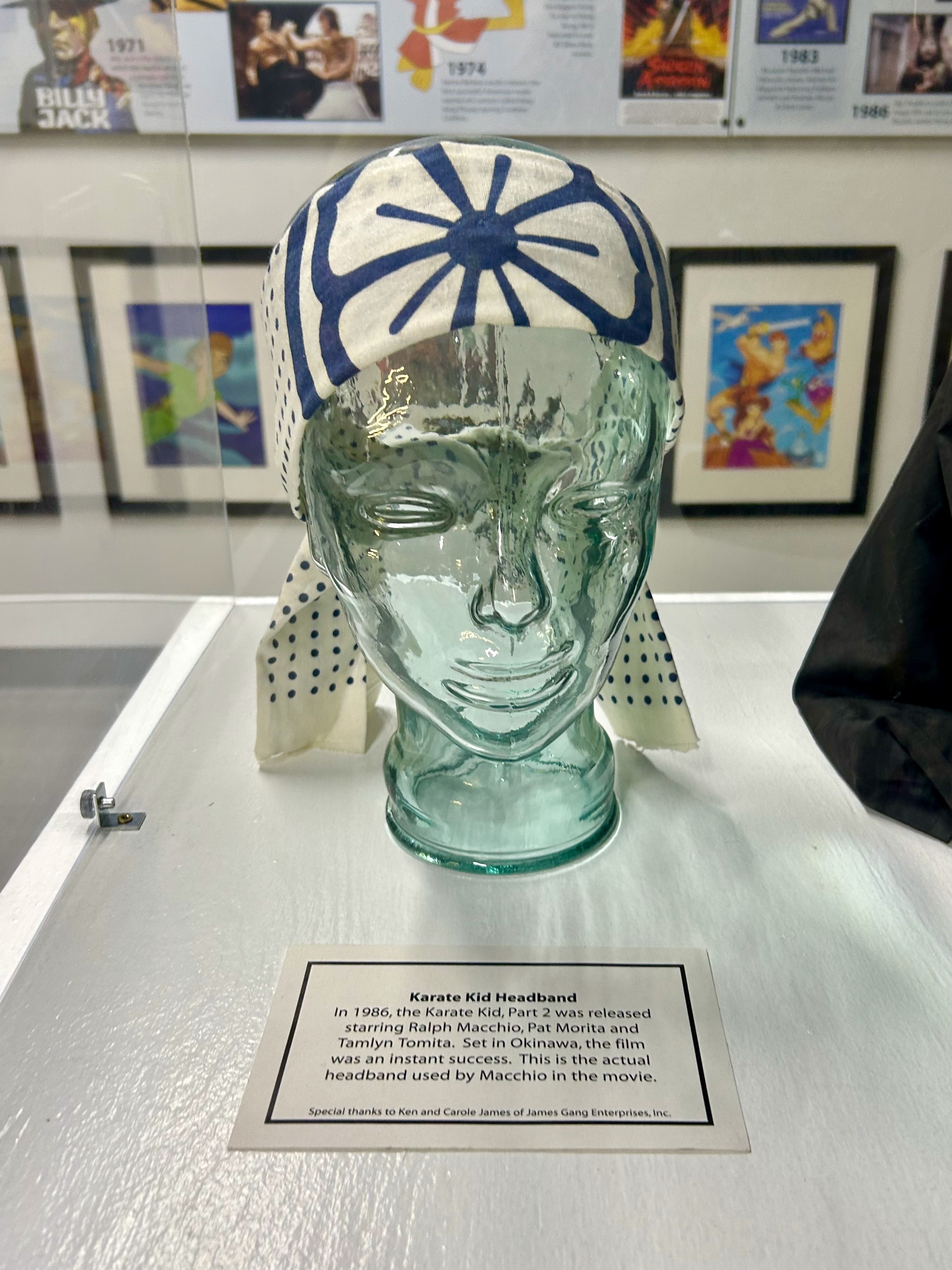
After initially launching as a mobile exhibit, the Martial Arts History Museum is now in its 26th year, and has been at the current location in Glendale for a year and a half. The museum’s collection celebrates martial arts from around the world, with a focus on Asian art, music, and culture, and highlights the positive contributions of the Asian American community. The artifacts include traditional weapons, costumes, instruments, art, and even Lego and anime. And of course, the museum also boasts an impressive collection of martial arts memorabilia, including uniforms from groundbreaking martial artists. Everything in the museum’s collection has been donated. Matsuda explains, “Even before we opened our doors, these pioneers—these guys that came here to America from China and Japan—donated their uniforms to the museum. I have Tak Kubota’s very first uniform he ever wore.”
Matsuda also feels a responsibility as a historian of the martial arts to honor the stories of those who came before. “I've been doing it now for 60 years…in martial arts, that's a long time. I'm one of the last historians left.” He shared with me the story of Jack Santos, one of the martial artists featured in the museum. A few months after Pearl Harbor, a gang entered Little Tokyo in Los Angeles intending to vandalize the community. “They wanted to mess it up. They wanted to knock down everything. And here was Jack Santos. Comes up there with two Kali sticks [Filipino martial art sticks] and stands in front of the crowd and says, 'Nobody is getting by me.' And nobody did. They all back down and turn around. He was an expert in Kali. But here he was, a Filipino guy protecting the Japanese community in Little Tokyo. These are wonderful stories that are going to be lost if we don't do something.”
For Matsuda, it’s so important that the public remembers the people and the cultures behind what we see in the movies. “Sacrifices were made by the Asian community—so many people gave up so much, faced so much prejudice and racism during the early times, but still, they brought the art here. Still, they shared the art with the non-Asian community. We have the movies that have taken advantage of all the martial arts that were brought here. We have all this because of the sacrifices that were made by these Asian pioneers. And I think it’s important that we save that.”
The Martial Arts History Museum also provides services to the local community. In addition to hosting free anti-Asian hate and anti-bullying trainings, the museum opens its doors specifically to those affected by dementia and mental or physical challenges. “We work with each group, and they come in here free of charge. We had a group of Asian community members, 90 years and above, with dementia. And one guy saw his teacher's picture right there on the wall from 1920. And all of a sudden, he started talking all about the time he studied with his teacher, and it opened up a door—maybe just for a little while—but it clicked something in him.”
Matsuda’s goal is to expand the museum further, and eventually build an even greater community presence. “We're 8,000 square feet, but we need a bigger location. It only takes one or two people to come on board and say, ‘Hey, I think you have a good idea here.’” Preserving the legacy and impact of the martial arts is a priority that he hopes others share. “What we leave behind—I think that's important.”
For more information about the Martial Arts History Museum, you can visit their website or follow them on Instagram.