
Bringing AAPI History into K-12 Classrooms: An Interview with the Asian American Education Project’s Stewart Kwoh
.png)
Prior to 2020, Asian American history was essentially absent from most K-12 public school curriculums.
Movements to mandate its teaching gained momentum after the sharp rise in anti-Asian hate during the pandemic, and while significant progress has been made, as of today just 13 states have statutes that include Asian American studies requirements, and 26 states have statutes that include ethnic studies requirements. It’s through the efforts of people like Stewart Kwoh, Co-Founder and Co-Executive Director of the Asian American Education Project (AAEP), that we first saw a push to incorporate Asian American studies into K-12 curriculums. And even now, in places where it is mandated, teachers need training to teach AAPI history. I caught up with Stewart Kwoh to discuss how his organization came to be, and what they’re doing now to ensure that teachers and students are fully equipped to learn about the struggles, successes, and contributions of AAPIs.
The need for AAPI history resources and training
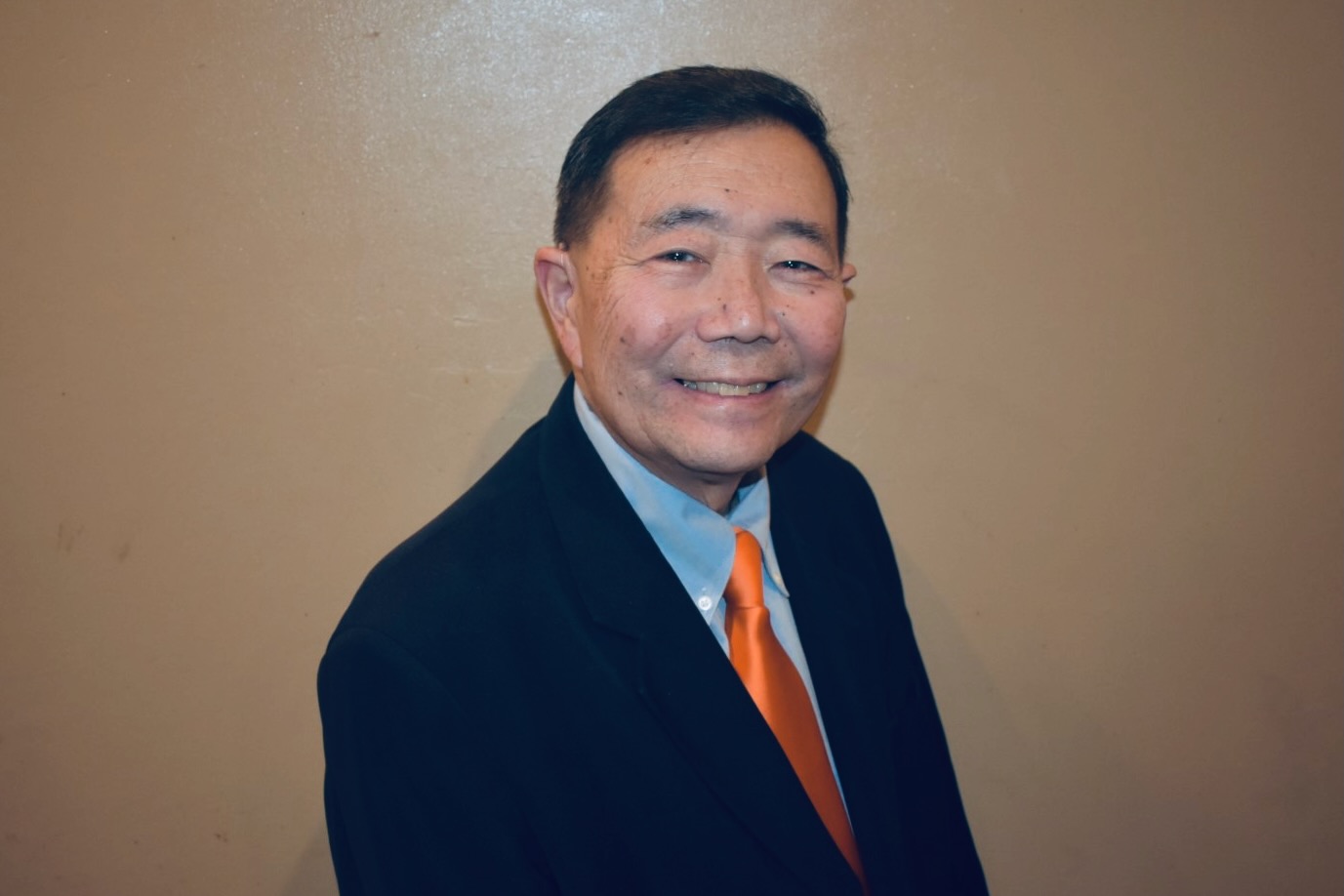
Prior to launching AAEP, Stewart Kwoh spent 35 years as the president of Asian Americans Advancing Justice Los Angeles, an organization that grew to become one of the largest civil rights groups in the country. At the same time, he also taught a class, “Asian Americans and the Law,” at UCLA through the Asian American Studies Center. It was this experience in particular that first demonstrated the need for AAPI history in schools. Kwoh noticed that by the 1990s, students were entering his class with less and less knowledge of Asian American history.
After Kwoh co-wrote the book Untold Civil Rights Stories: Asian Americans Speak Up for Justice, his wife Patricia suggested they develop lesson plans for the book to try to get it into K-12 schools. And when PBS released their documentary Asian Americans, they asked the Kwohs to be in charge of the curriculum. At the beginning of 2021, with 48 lesson plans, the Kwohs launched the Asian American Education Project. Today AAEP has developed over 200 lesson plans and trained more than 15,000 teachers nationwide in workshops, professional development trainings, and conferences.
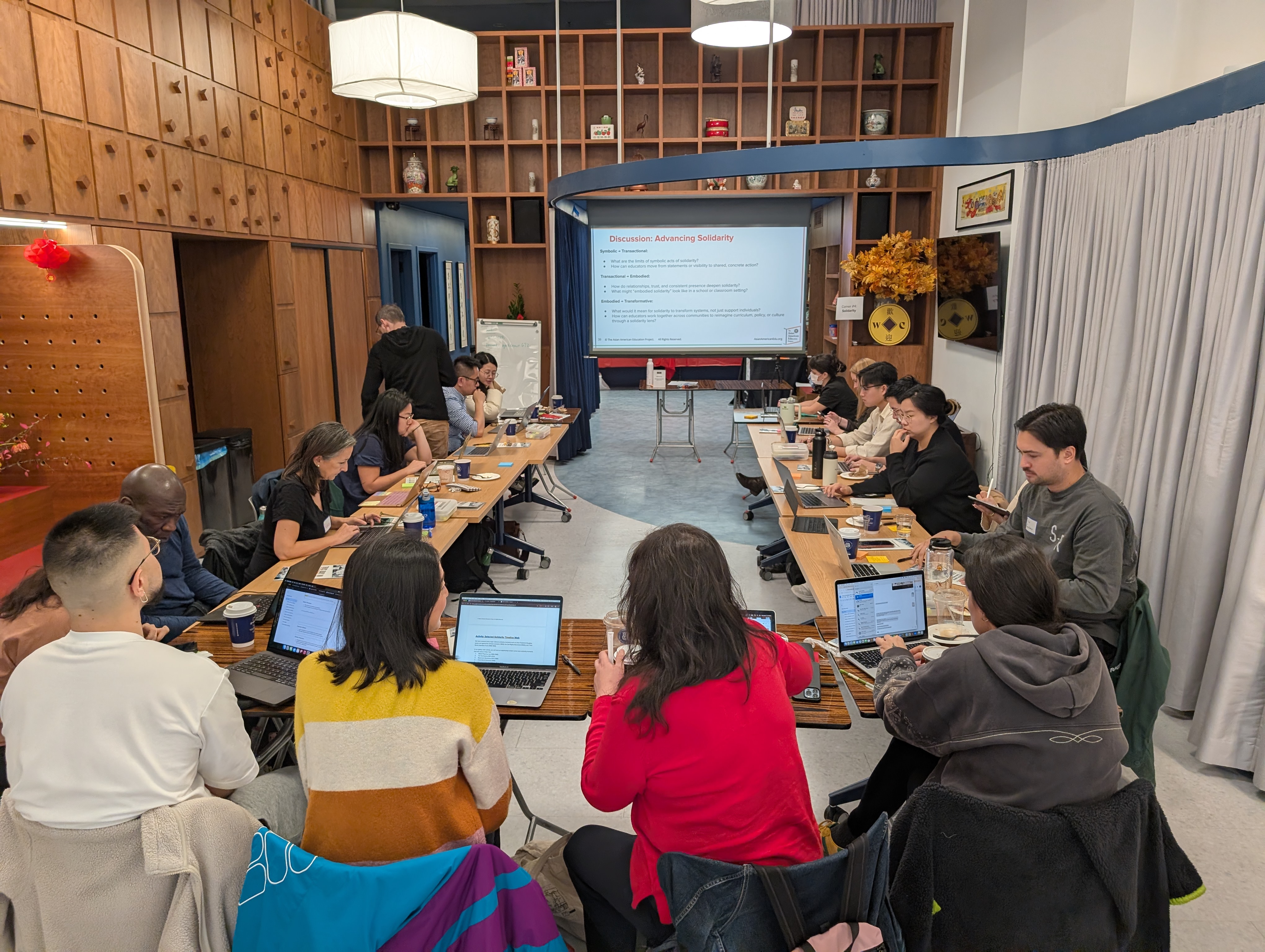
The ultimate goal of the trainings is for teachers to understand how to incorporate AAPI history into their regular school curriculum. “It's really incumbent upon us to train the teachers because you could have great materials, but unless the teachers are trained and understand how to use it in the classroom, it doesn't go as far as we want,” Kwoh explained. “It's true for social studies, but it's also true for math. I usually use an example where the math teacher is doing some lessons on graphing. Why not use the rise in anti-Asian violence to graph how it really increased from 2020 to 2025? There are different ways in the pedagogy to teach the teachers how to use our materials.”
Making inroads across the country
AAEP has conducted teacher trainings in over 20 states. They’ve worked extensively in New York, connecting with hundreds of schools, the United Federation of Teachers, the Service Employees International Union, and community groups including the Sikh Coalition, Museum of Chinese Americans, the Coalition for Asian Pacific Children and Families, and the Korean Community Services. But their reach is nationwide, with recent trainings taking place from Orange County, California to Milwaukee, Wisconsin.
TAAF has supported us in our work in the South, which we feel is very important because the state legislatures have not been able to move things in a positive direction, in our view. -Stewart Kwoh
What’s new, and something of a challenge, is the push AAEP is making into parts of the South, where there's no mandate to teach Asian American history. After starting off in Texas and Georgia, AAEP is now working in North Carolina. Through a TAAF-funded project, AAEP recently ran a cohort in North Carolina, which received over 100 applicants. More than 30 teachers participated. “The teachers really loved it,” Kwoh said. “So we wanted to continue to do work in North Carolina because the cohort is kind of like a catalyst. The participants become ambassadors for the curriculum, and they try to help us get into the school or school districts that they're in or have contacts with. TAAF has supported us in our work in the South, which we feel is very important because the state legislatures have not been able to move things in a positive direction, in our view.”
Cross-racial solidarity
Kwoh stressed the need for K-12 students of all backgrounds to be introduced to Asian American history, because it is so deeply tied to the histories of other groups in this country. He shared how during AAEP trainings in NYC, some Black and Latino students expressed that Asian Americans didn’t have civil rights issues. “I'm not blaming the students at all,” Kwoh said. “It's just that they didn't know. And this is particularly important because people should know who Wong Kim Ark is because it really ties to the whole issue of birthright citizenship, which is a major issue right now in our country. People should know if you're in an ESL program, where did that come from? Lao vs Nichols. Asian Americans have contributed not just to Asian-American rights, but to all the rights in our country.”
Cross-racial solidarity and understanding goes both ways. Kwoh also wants students to know that AAPIs stand on the shoulders of people like Frederick Douglass. “When we get new staff, I ask, “Who was the first non-Asian to really fight for Chinese immigrants in the 1800s?” And people don't really know. But in 1869, just after the Civil War, Frederick Douglass went on a campaign that lasted for over eight years to call for a composite nationality. This was at a time when Chinese exclusion was just gaining steam in the country.”
A graphic novel series changing perceptions of AAPIs
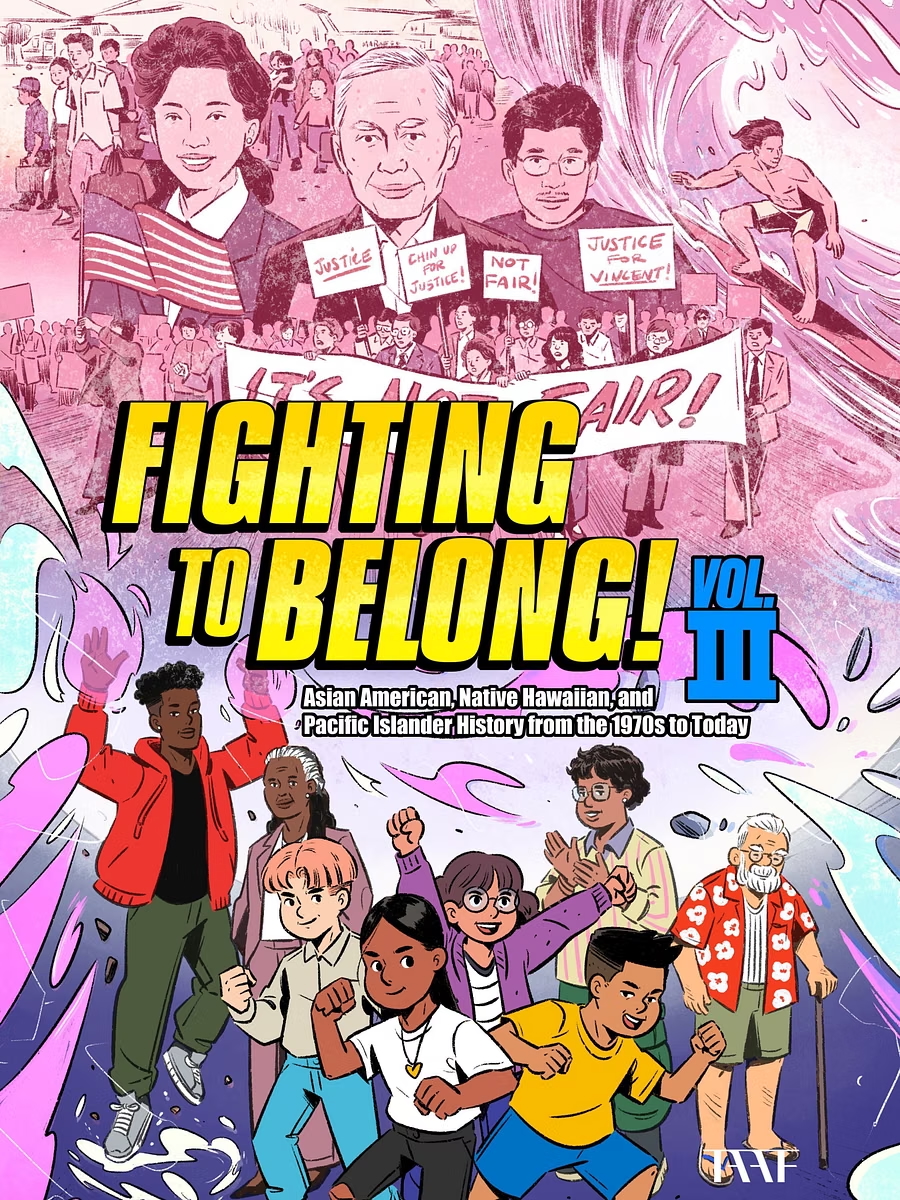
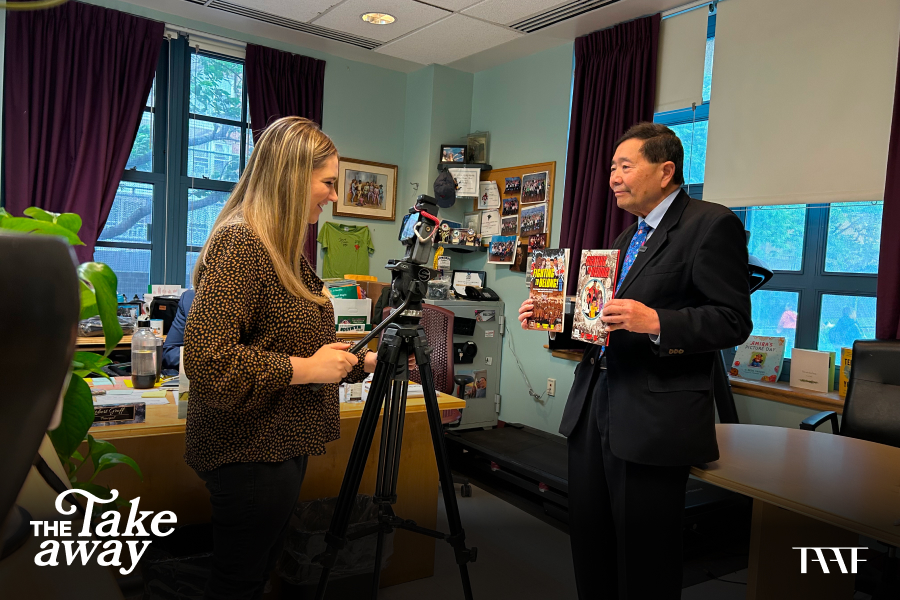
One way to get young people engaged in AAPI history is through age-appropriate storytelling. That’s why TAAF collaborated with Third State Books and AAEP on the Fighting to Belong! graphic novel series, which launched in 2024. With the help of renowned comic book writer Amy Chu, co-writer Alexander Chang, and illustrator Louie Chin, Fighting to Belong! brings AAPI history to life in an accessible way for ages 8-13. Readers follow a group of middle school protagonists who journey through time and witness key events in AAPI history. Volume 1 covers the 18th and 19th centuries, beginning with the Manilla Men. Volume 2 explores the 20th century, and events such as the Japanese incarceration during World War II. Volume 3, which is released October 13, explores history from the 1970s till now. AAEP also develops the curriculum guides that accompany the graphic novels. Kwoh summed up the value of the series: “The graphic novel series is one part of teaching about how we have not only struggled, but contributed to America's civil liberties, civil rights, and prosperity.”
Fighting to Belong! Volume 3 is out on October 13. You can preorder a copy here.
To learn more about the Asian American Education Project, you can follow them on Instagram or visit their website.